Reviewed by L. J. Anderson, PhD Student, Liberty Theological Seminary
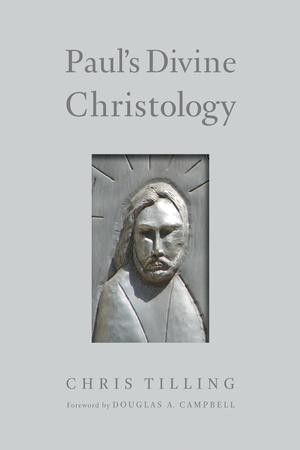
In Paul’s Divine Christology, Chris Tilling offers a critical and ambitious exploration of Pauline Christology, specifically asking whether Paul’s writings support the idea of a divine-Christology. At the heart of Tilling’s argument is the claim that Paul’s unwavering “Christ-devotion” reveals a theological framework wherein Jesus is accorded a status and role reserved for God alone. This devotion, Tilling argues, functions as the clearest signal of Paul’s divine-Christology, as opposed to being merely a reflection of Christ’s work or function (177).
Summary of the Argument
Tilling’s thesis is carefully constructed through a combination of exegetical and theological analysis, engaging heavily with post-1970s scholarship that has emphasized the Jewish context of Paul’s thought. Rejecting a proof-texting approach, despite admitted pushback, Tilling instead focuses on the broader patterns and theological logic within Paul’s undisputed letters. The book interacts with scholars such as Richard Bauckham, James Dunn, Gordon Fee, and Larry Hurtado, often affirming their direction while pushing for a more holistic treatment of Paul’s view of Jesus.
Key to the book’s methodology is its restriction to the seven undisputed Pauline epistles, which Tilling defends as a scholarly cautiousness, albeit one not without consequences. He seeks to avoid reading later doctrinal developments into the text, grounding his conclusions firmly in the relational and devotional language of Paul. Through this lens, titles such as “Lord” (κύριος), the application of the Shema in 1 Corinthians 8:6, and Paul’s portrayal of the believer’s relationship with Christ are all marshaled as evidence of a divine-Christology.
Critical Evaluation
While Tilling’s case is measured and scholarly, it is not without problems. Perhaps the most significant issue is methodological: by limiting his study to only the undisputed Pauline letters, Tilling risks presenting a truncated vision of Paul’s theology. Tilling states, “This chapter aims to uncover the breadth of relevant material, generating a cumulative case,” and “we will emphasise the overarching construal of Paul’s language” (105). How is this possible, considering that Tilling has effectively thrown out half of Paul’s work? This decision excludes the rich material found in Colossians and Ephesians—texts that many would argue contain some of the highest Christological expressions in the Pauline corpus. Tilling aims to construct a cumulative argument, but the omission of nearly half of Paul’s letters raises the question: can such an argument truly be comprehensive?
In terms of tone and argumentation, Tilling’s repeated use of the term arguably gives the impression of a scholar hesitant to overstate his case. While intellectually cautious, this rhetorical habit can occasionally undermine the force of his critiques. This tendency is especially prominent in his critiques of fellow scholars in Chapter 3.
Another theological concern is Tilling’s reliance on a concept he calls “relational monotheism,” where allegiance rather than ontology becomes the key marker of monotheistic faith. While there is absolutely truth to what Tilling is saying, this approach may inadvertently legitimize the existence of lesser “gods” in a way that is inconsistent with the biblical witness, which frequently affirms Yahweh’s singularity not merely as a relational claim, but as an ontological one (e.g., Isaiah 45:5). Tilling misses a key nuance in what Paul was saying in 1 Corinthians 8:4-6 and 10:19-21, namely that, while Paul acknowledges other “gods” in name, he rejects that they have any true divinity.
Additionally, Tilling’s discussion of Scripture’s formation leans too heavily on human authorship, with insufficient emphasis on the role of the Spirit in inspiring Scripture. This reflects a broader trend in biblical scholarship that tends to minimize the Spirit’s role in inspiration. Scripture must be upheld as being written by both God and men.
Despite these concerns, Tilling’s work succeeds in its primary goal: demonstrating that for Paul, Jesus is not simply a powerful agent of God, but the object of faith, love, and devotion typically reserved for God alone. The presentation of Paul’s Christ-devotion as the interpretive center of Pauline Christology is insightful and worthy of further discussion.
Engagement Questions for Further Study
- Is the limitation to the undisputed letters methodologically sound, or does it result in a diminished portrait of Paul’s theology?
- Does Paul’s use of κύριος (Lord) imply ontological unity with God, or merely exalted function?
- What implications does Tilling’s argument have for Trinitarian theology?
- Can relational monotheism adequately safeguard biblical monotheism without unintentionally endorsing polytheistic categories?
- How might the broader canon shape or challenge Tilling’s conclusions?
Conclusion
Paul’s Divine Christology is a serious contribution to Pauline studies. While not without flaws, it invites careful reflection on the identity of Christ in Paul’s letters and challenges readers to reconsider how early Christian devotion relates to divine identity. For scholars interested in the theological shape of early Christianity, Tilling’s volume is essential reading, especially as a conversation partner, not a final authority.
Share this:


 L. J. Anderson - Author and Blogger