Reviewed by L. J. Anderson, PhD Student, Liberty Theological Seminary
Summary
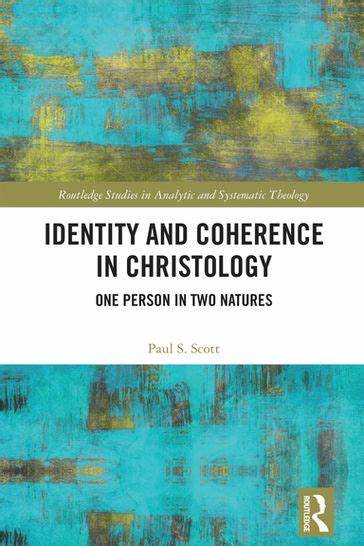
Paul Scott’s Identity and Coherence in Christology provides a philosophically rigorous and analytically careful examination of how Christ can be both fully divine and fully human without contradiction. Drawing from scholastic and analytic sources, Scott surveys several traditional and modern models, including reduplication, specification, and mereology (the philosophical study of parts and wholes, applied here to Christ’s natures), before ultimately advocating a semantic solution grounded in predicate modification.
Scott correctly identifies the core challenge: Christ must possess all essential attributes of both natures without logical inconsistency. He critiques restrictionist strategies, such as Aquinas’s aspects model, as ultimately unworkable. Though he acknowledges that mereological approaches are logically coherent, he rejects them for failing to preserve a classical understanding of divine simplicity and personhood.
Instead, Scott proposes a refined habitus theory (a medieval model in which Christ’s human nature is a kind of habitual disposition added to the divine person) in which the Word is human not ontologically but relationally. He argues that Christ’s humanity functions as an external adjunct (something added externally and not essential to the subject itself), like a garment shaped by the divine person. This leads him to claim that Christ “is-qua-human passible” (p. 169), while remaining impassible as God. This is a semantic modification of the “is,” whereas a reduplication attempt would modify based on the nature in question. It would look more like this: Christ qua [as] God is impassible, but Christ qua [as] man is passible. Scott rightly critiques these as Nestorian and/or logically incoherent.
Critique
Scott’s analytical clarity and systematic rigor are commendable. He compellingly demonstrates the deficiencies in traditional Christological strategies and addresses modern semantic alternatives with philosophical sophistication. His acknowledgement of mereological coherence is particularly notable.
Scott’s turn to a semantic solution grounded in a renovated habitus theory appears initially promising, especially in its effort to uphold Chalcedon while avoiding metaphysical contradiction. He writes, “I have attempted to renovate the long-since abandoned habitus theory of the Incarnation. The basic commitment of the habitus theory is that the Word’s being human, and being the subject of all of the attributes of the human nature, is entirely a relational matter” (p. 168). This line reveals the true heart of Scott’s strategy: the Word is not human in any ontological sense but merely in virtue of a unique hypostatic relation to something that is human. That “something” is a created nature that the Word wears like a garment—Scott’s favored analogy.
Yet this “relational” commitment undermines the force of the very doctrine Scott seeks to defend. In the classical habitus view (and in Scott’s revision of it), Christ’s humanity is an adjunct to the Word, not something truly possessed or assumed into the divine person’s own being. He elaborates: “While ‘human’ is something which the Word truly is, ‘human nature’ is something which the Word has, and it is only by virtue of this ‘having’ that humanity and its attendant attributes are predicable of the divine person. Hence, the motivation for the assumed nature’s being likened to a donned garment: the assumed nature relates to the Word as an external adjunct, rather than as a co-equal conjunct or an inhering accident” (p. 169).
Despite the claim that the Word “truly is” human, Scott’s metaphysical framework makes that claim incoherent. If humanity is not internal to the Word’s person but only something the Word “has” through an external relational union, then it is simply false to say the Word is human. Having a relation to something human is not the same as being human. In everyday terms, a man who wears a coat is not thereby woolen; and a person driving a car is not thereby mechanical. Scott wants to preserve the truth of the Incarnation while denying the metaphysical conditions that make it intelligible.
The theological consequences are serious. By this framework, the Word does not truly suffer. Scott makes this explicit: “The passibility of the Word is owing to the Word’s hypostatic relation to a passible external adjunct” (p. 169). Suffering occurs in the adjunct and is not experienced by the Word. This effectively removes the Son from the actual suffering of the cross. He becomes associated with it only by proxy, not in person. Moreover, Scott describes the hypostatic union as a “three-way” connection, stating, “What makes the hypostatic union unique is that it involves a ‘three-way’ union between the divine person and the various constituent parts of the human nature, the flesh and soul” (p. 169). But this only compounds the problem. Not only is the human nature an adjunct, but it is itself a constructed whole that is united to the Word from the outside.
The overall result is a metaphysical bifurcation of Christ. The Word is impassible, changeless, and essentially divine. The adjunct is passible, temporal, and human. The person of Christ becomes not one unified reality but a relation between unlike substances. This is not “one person in two natures.” It is, instead, one person joined to a nature that is not truly his. It verges on Nestorianism, even if it avoids the explicit claim that there are two persons in Christ. By severing the Word from the internal possession of humanity, Scott also severs the possibility of real union.
This also raises profound exegetical concerns. John 1:14 states, “The Word became flesh.” It does not say that the Word related to flesh, or that flesh was added alongside the Word. The Greek verb egeneto denotes actual ontological change or transition, not mere association. If taken at face value, Scott’s model seems incompatible with the claim of John 1:14. The Word did not become flesh, but merely became related to it. The garment metaphor, which Scott embraces, cannot account for the force of the Incarnation. A person who puts on a garment does not become that garment, and a divine person who relates to humanity does not become human in any meaningful way. The result is a Christ who appears human but is not ontologically so—a return to Gnosticism, specifically Docetism, in effect, if not in intent. The Word only appeared to have a body, but really it was just a “garment.” It is almost certain that Scott would be opposed to this; however, it is what his model has effectively produced.
In short, Scott’s solution may preserve Chalcedonian language, but it undermines Chalcedonian substance. The unity of person is maintained only in words, not in metaphysical or ontological fact. The cross is not endured by the divine person, but only by something adjacent to him. The Incarnation is not the Word becoming flesh, but the Word relating to flesh. This is not a recovery of orthodoxy but may instead amount to a semantic illusion.
Share this:


 L. J. Anderson - Author and Blogger