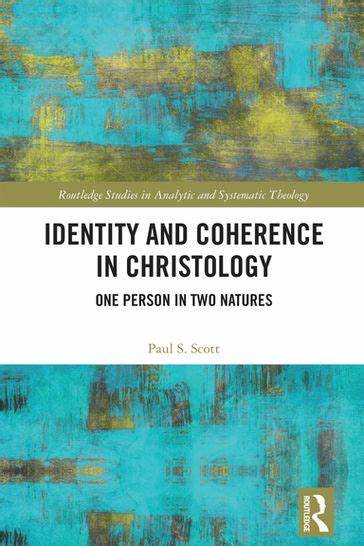
Paul Scott, Identity and Coherence in Christology: One Person in Two Natures. New York: Routledge, 2024. 198 pp. $54.99.

Reviewed by L. J. Anderson, PhD Student, Liberty Theological Seminary

Summary

Paul Scott’s Identity and Coherence in Christology provides a philosophically rigorous and analytically careful examination of how Christ can be both fully divine and fully human without contradiction. Drawing from scholastic and analytic sources, Scott surveys several traditional and modern models, including reduplication, specification, and mereology (the philosophical study of parts and wholes, applied here to Christ’s natures), before ultimately advocating a semantic solution grounded in predicate modification.

Continue reading “Paul Scott, Identity and Coherence in Christology: One Person in Two Natures. New York: Routledge, 2024. 198 pp. $54.99.”

Why the Moral Argument Deserves a Comeback

Apologetics has no shortage of tools: cosmological arguments, historical evidence for the resurrection, and even design arguments rooted in physics. Yet one particular argument continues to fly under the radar in many academic circles: the moral argument.

For years, I’ve been puzzled by how little attention this argument receives, especially when it continues to be one of the most intuitively compelling arguments for ordinary people. In fact, I once buried my own treatment of the moral argument as a chapter in a broader work (Contending for the Truth), only to realize later that it deserved more visibility. That’s why I’ve now released The Moral Argument as a standalone book. It’s time to give this argument a second look.

Continue reading “Why the Moral Argument Deserves a Comeback”

The Line in the Sand: Why Inerrancy Still Matters

For decades, theologians have debated whether inerrancy is a helpful term, a divisive term, or even a necessary one. Some prefer “infallibility,” others think we’ve outgrown the entire conversation. But here’s the problem: Scripture never gave us permission to step back from what it says about itself.

Continue reading “The Line in the Sand: Why Inerrancy Still Matters”

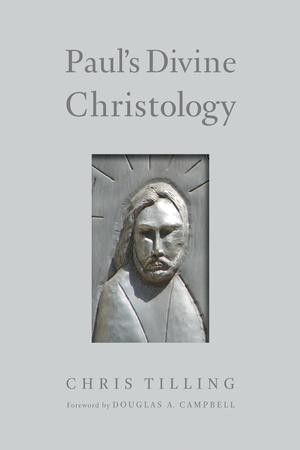
Chris Tilling. “Paul’s Divine Christology.” Grand Rapids, MI: Wm B. Eerdmans, 2012. 322 pp. $35.00 (paperback).

Reviewed by L. J. Anderson, PhD Student, Liberty Theological Seminary

In Paul’s Divine Christology, Chris Tilling offers a critical and ambitious exploration of Pauline Christology, specifically asking whether Paul’s writings support the idea of a divine-Christology. At the heart of Tilling’s argument is the claim that Paul’s unwavering “Christ-devotion” reveals a theological framework wherein Jesus is accorded a status and role reserved for God alone. This devotion, Tilling argues, functions as the clearest signal of Paul’s divine-Christology, as opposed to being merely a reflection of Christ’s work or function (177).

Continue reading “Chris Tilling. “Paul’s Divine Christology.” Grand Rapids, MI: Wm B. Eerdmans, 2012. 322 pp. $35.00 (paperback).”

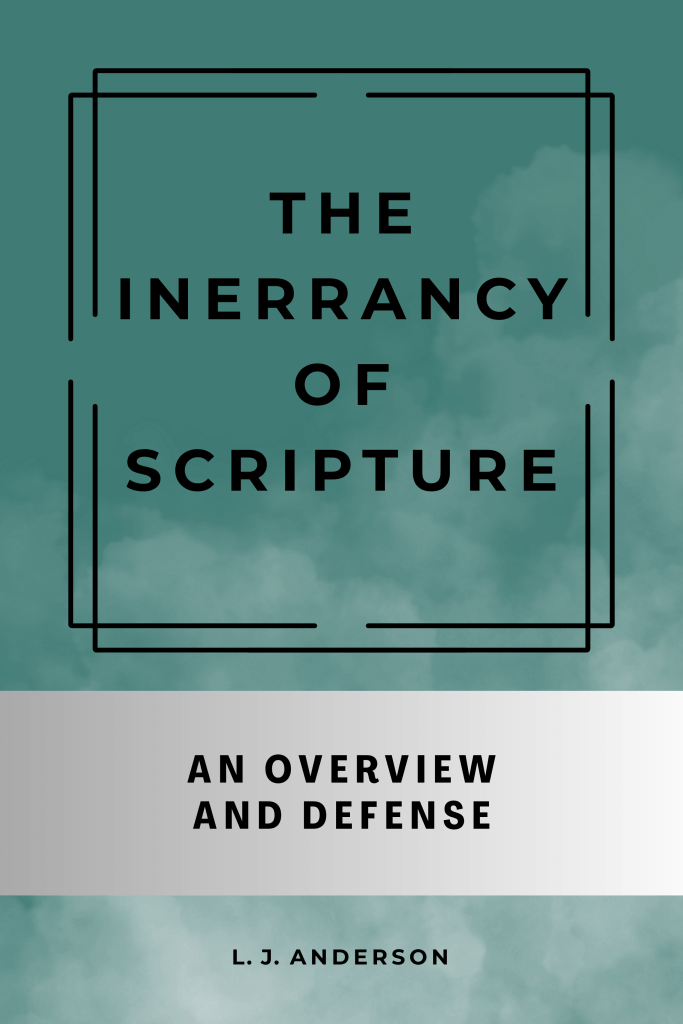
Preorder Now: The Inerrancy of Scripture

Why This Foundational Doctrine Still Matters

Is the Bible truly without error? Or have modern thinkers simply lowered the bar for what they’re willing to believe?

I’m pleased to announce that my next short book, The Inerrancy of Scripture, is now available for preorder, with the official release set for July 1st. This is an expanded version of a chapter originally published in Contending for the Truth, now given the space and focus it deserves.

Continue reading “Preorder Now: The Inerrancy of Scripture”

New Release: The Moral Argument

Why Universal Morals Still Matter in Apologetics

I’m excited to announce the release of a new short book from Lamad Press: The Moral Argument. This work is an expanded, standalone version of a chapter originally published in Contending for the Truth, but it quickly became clear that the argument needed to breathe on its own. Why? Because most Christians (and most search engines) aren’t looking for apologetics content buried in a book titled Contending for the Truth. They’re looking for answers to specific questions. And this book addresses one of the most common and neglected ones: Can morality point to God?

Continue reading “New Release: The Moral Argument”

When Doctrine Gets Personal: Why I Wrote Contending for the Truth

Most Christians know what they believe, but far fewer know why they believe it. And fewer still have taken the time to compare the popular teachings in Christian culture with what the Bible actually says. That tension—between tradition and Scripture, assumption and truth—is where Contending for the Truth lives.

Continue reading “When Doctrine Gets Personal: Why I Wrote Contending for the Truth”

Book Review: Transformational Teaching by Coley, MacCullough, and MacCullough – A Biblical Approach to Instructional Design

Transformational Teaching: Instructional Design for Christian Educators. Kenneth S. Coley, Deborah L. MacCullough, and Martha E. MacCullough. Brentwood, TN: B&H Academic, 2023. 498 pp. $59.99, paper.

Reviewed by Logan Anderson, Ph.D. Student, Theological Studies, Liberty Theological Seminary, Lynchburg, VA.

Continue reading “Book Review: Transformational Teaching by Coley, MacCullough, and MacCullough – A Biblical Approach to Instructional Design”

Book Review: The Three Musketeers by Alexandre Dumas – A Classic Romance With Surprising Depth

by L. J. Anderson

I recently finished reading The Three Musketeers by Alexandre Dumas, and I have a lot of thoughts. This is a book I’ve wanted to read for years—mainly because I’m a big fan of the 1993 movie adaptation. I’ve watched that version more times than I can count, so I figured the book would be just as enjoyable, if not more.

But surprisingly, that wasn’t quite the case for me.

Continue reading “Book Review: The Three Musketeers by Alexandre Dumas – A Classic Romance With Surprising Depth”

Why the Nicene Creed Focuses on Jesus: A Look at the Creed’s 1700th Anniversary

The year 2025 marks the 1700th anniversary of the Nicene Creed. This foundational Christian document was first written in 325 AD at the Council of Nicaea, and it still plays a vital role in how we understand Christian doctrine today.

In this post, I want to take a few minutes to walk through the original creed, read it aloud, and explore why it places so much emphasis on the Son, Jesus Christ, and not as much on the Father or the Holy Spirit.

Continue reading “Why the Nicene Creed Focuses on Jesus: A Look at the Creed’s 1700th Anniversary”