I took a class on intercultural communication in my second semester at Moody Bible Institute back in 2018. My professor and I ended up clashing over several different things in that class which likely comes as no surprise to those who know me.
Continue reading “Living Counterculturally”Category: General Theological Teaching

What Happens to People Who Never Hear the Gospel?
One of the biggest questions that we struggle with as Christians is—what happens to those who have never heard about God? This is a very important question and, in many ways, the answer is fairly depressing. Does God have mercy on those who were never reached by Christians? The short answer is no.
Continue reading “What Happens to People Who Never Hear the Gospel?”Share this:

A Short Argument Against Simple Religious Pluralism and For the Uniqueness of Jesus
Simple religious pluralism is an attack on the uniqueness of Jesus by viewing all religions as an equally effective means of getting to God. Thus, Islam, Mormonism, and Hinduism, despite being completely contradictory religions by nature, are all perfectly legitimate ways to God. Not only are they ways to God, but to argue that one is the only way is inherently wrong. Yet, this is precisely the claim by Jesus in Scripture.
Continue reading “A Short Argument Against Simple Religious Pluralism and For the Uniqueness of Jesus”Share this:

John Wesley on Christian Perfection
One can learn a lot regarding faith and practice by studying some of the great theologians of the past. This is even, maybe especially, true regarding those that one tends to disagree with. John Wesley’s view of Christian perfection is certainly one such case of this. Most contemporary Christians who engage with it find John Wesley’s view of Christian perfection to be wrong, and perhaps rightly so, but does that mean it is not worth looking into? This paper seeks to discuss Christian perfection according to John Wesley, engage with it theologically, and demonstrate that, though there is a ton of value in it, Wesley’s view is slightly extreme.
Continue reading “John Wesley on Christian Perfection”Share this:

Interpretive Commentary on Zechariah 12-14
Historical Setting and Date
The historical setting of Zechariah is the reign of King Darius, specifically the eighth month of the second year of his reign. It then moves through to the fourth year of King Darius’s reign which is the last date seen in the book itself. Thus, the first eight chapters of the book can be dated accurately to 520-518 B.C. based on the prophecies found within the chapters.[1] However, chapters nine through fourteen have prophecies that are not dated and there is more ambiguity as to what time frame these prophecies are referencing. Scholars have different views as to when these prophecies should be dated, but they typically date them after the first eight chapters.[2]
Continue reading “Interpretive Commentary on Zechariah 12-14”Share this:

Interpretive Commentary on 2 Chronicles 26-29
Historical Setting and Date
The name “Chronicles” came from St. Jerome in the 4th century A.D.[1] However, the Hebrew name of Chronicles is דברי הימים divre hayamim meaning “words of the days.” Originally, 1 and 2 Chronicles were one book. They were later split into two by the translators of the Septuagint.[2] Thus, it is important to look at both of them together as one book. The author sets the book, for the most part, in the time of the kings, though it starts with a whopping nine chapters of genealogies beginning with Adam and going down through to Saul who is briefly addressed in chapter nine of 1 Chronicles. Though the setting is the kings of Israel, the book was not written during the era of the kings. Instead, it was written to the exiles who had returned from Babylon after the events of Chronicles took place.[3] The likely date of writing is between 400 and 500 B.C.[4]
Continue reading “Interpretive Commentary on 2 Chronicles 26-29”Share this:

What Does It Mean to Love God and Others?
Jesus tells us that we are to love the Lord our God with all our hearts, souls, minds, and all our strength. Second, we are to love our neighbor as ourselves. But what does that actually look like? After all, many people believe that love is a chemical, an emotion, or a feeling. To be sure, there is some level of truth to that. However, is that idea biblical? Not really.
Continue reading “What Does It Mean to Love God and Others?”Share this:

What are Doctrines and Why do They Matter?
What are doctrines? From a Christian perspective, doctrines are simply teachings that are found in Scripture. Put another way, everything taught in Scripture fits under the word “doctrine.” But, what does that mean from a practical point of view, and why does it matter? Continue reading “What are Doctrines and Why do They Matter?”
Share this:

The Validity of Ancient and Modern Translations of the Bible
You do not have to look far to see differences in translation between one Bible and another. Why are there differences, and does the fact that there are differences mean that translations aren’t valid? These, and similar questions, are very important questions to have answers for. After all, if our translations aren’t accurate, how can we possibly know the truth? Most people don’t have the time to learn one foreign language much less three.
Continue reading “The Validity of Ancient and Modern Translations of the Bible”Share this:

The Power of Reason for Evangelism
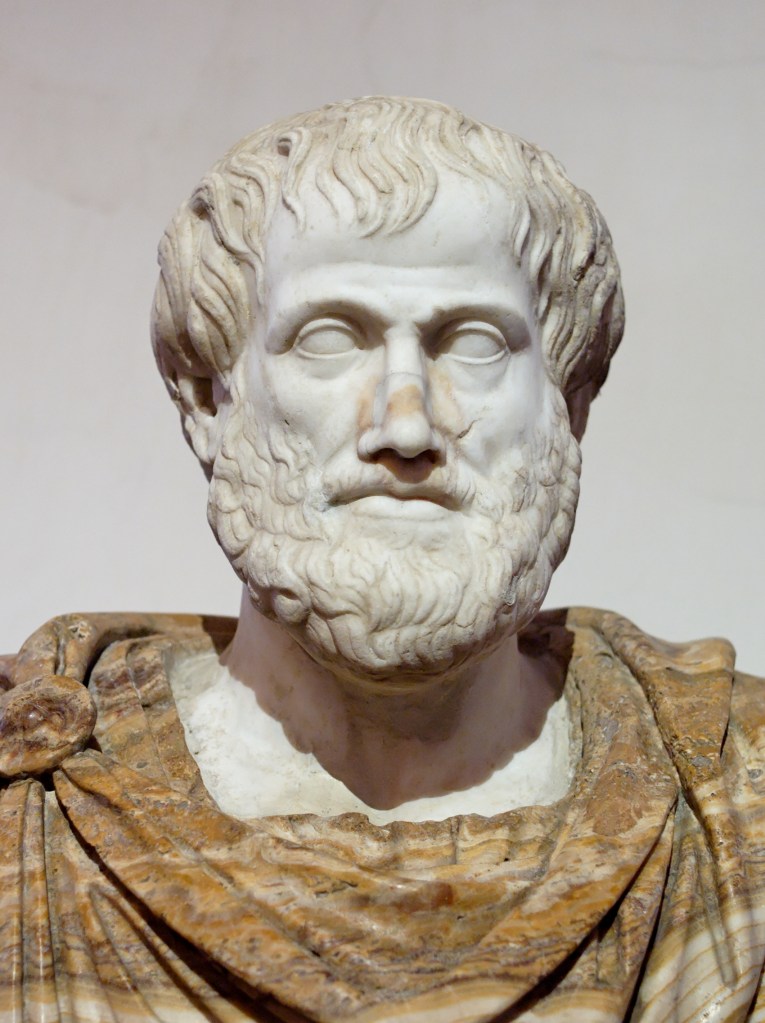
A few weeks ago, I posted The Power of Your Testimony. In this post, I discussed why your testimony can be so powerful for evangelism, but I also made the claim that reason is another one of these powerful tools. Now, there are other tools we can use to spread our faith, but these two blogs focus on what you can say to convince others that God is real and worth pursuing.
Continue reading “The Power of Reason for Evangelism”

