Did Paul Have a Memory Lapse in 1 Corinthians 1:15-16?

The Problem

Paul’s apparent forgetfulness in 1 Corinthians 1:15-16 produces distinct problems regarding one’s view of inspiration and the inerrancy of Scripture. If Paul forgot, and he is backtracking on what he said, then inerrancy almost certainly goes out the window. Is this a reasonable way to read what is going on in 1 Corinthians?

Continue reading “Did Paul Have a Memory Lapse in 1 Corinthians 1:15-16?”

Why Contextual Absolutism Changes Everything

Christians know the Bible well enough to recognize tension. One verse says, “No one is righteous, no not one” (Romans 3:10). Another says, “Noah was a righteous man” (Genesis 6:9). So, which is it? If we treat both verses flatly, they contradict. If we deny one side, we shrink Scripture. And if we wave our hands and call it “mystery,” we end up hiding behind a word that Scripture itself rarely uses in that way.

There must be a better way.

Continue reading “Why Contextual Absolutism Changes Everything”

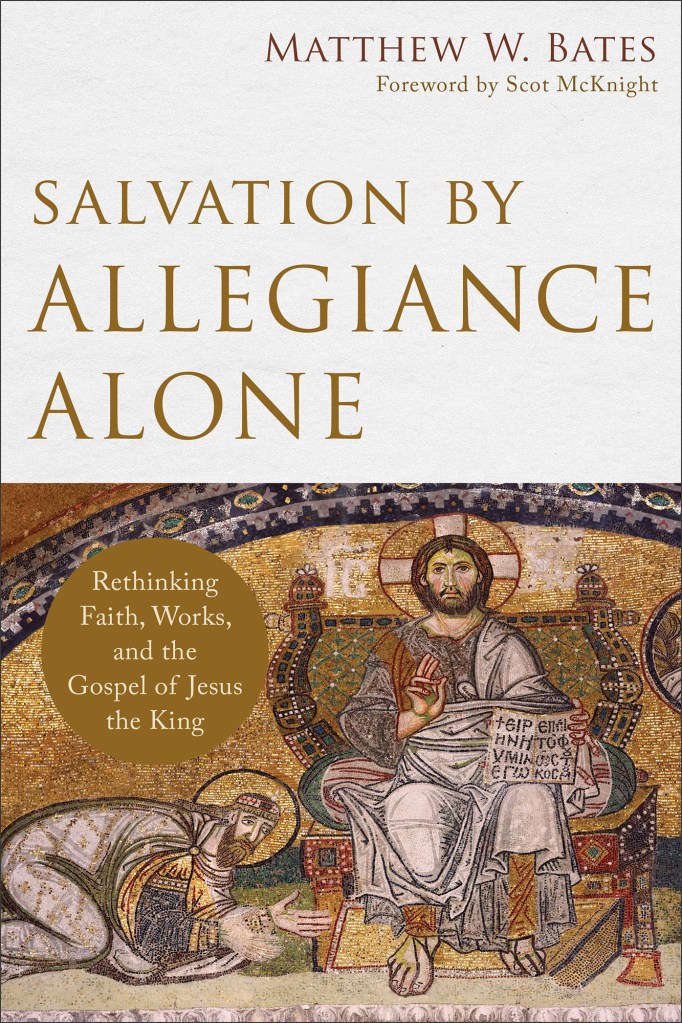
Book Review: Salvation by Allegiance Alone by Matthew W. Bates

Summary

Salvation by Allegiance Alone by Matthew W. Bates can be summed up with one of his early questions: “When the Apostle Paul says, ‘for it is by grace you have been saved through faith’ (Eph. 2:8), what if Paul’s idea of ‘faith’ (pistis) differs from typical contemporary understandings?” (p. 3). The book revolves around that single question, arguing that the Greek word pistis (typically translated as “faith”) ought instead to be rendered “allegiance” or “fidelity.” The title makes this clear. In fact, that sort of blunt clarity is one of the book’s strengths. Whether you agree with him or not, you can’t miss what he’s trying to say.

Continue reading “Book Review: Salvation by Allegiance Alone by Matthew W. Bates”

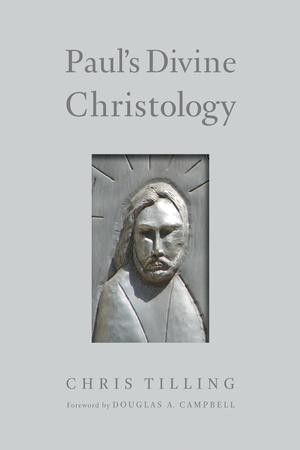
Chris Tilling. “Paul’s Divine Christology.” Grand Rapids, MI: Wm B. Eerdmans, 2012. 322 pp. $35.00 (paperback).

Reviewed by L. J. Anderson, PhD Student, Liberty Theological Seminary

In Paul’s Divine Christology, Chris Tilling offers a critical and ambitious exploration of Pauline Christology, specifically asking whether Paul’s writings support the idea of a divine-Christology. At the heart of Tilling’s argument is the claim that Paul’s unwavering “Christ-devotion” reveals a theological framework wherein Jesus is accorded a status and role reserved for God alone. This devotion, Tilling argues, functions as the clearest signal of Paul’s divine-Christology, as opposed to being merely a reflection of Christ’s work or function (177).

Continue reading “Chris Tilling. “Paul’s Divine Christology.” Grand Rapids, MI: Wm B. Eerdmans, 2012. 322 pp. $35.00 (paperback).”

Why AI-Generated Worship Videos Featuring Celebrities Are Ethically Wrong

By L. J. Anderson | January 2025

The rise of artificial intelligence (AI) has opened exciting possibilities in technology, creativity, and communication. But with that potential comes ethical responsibility—especially for Christians. Today, I want to speak plainly about a disturbing trend: the use of AI-generated deepfake worship videos that feature the voices, faces, and names of non-Christian artists like Eminem or Rihanna singing worship songs without their consent.

Spoiler alert: It’s not just unethical. It’s deceptive—and Christians should have no part in it.

Continue reading “Why AI-Generated Worship Videos Featuring Celebrities Are Ethically Wrong”

What Happens to People Who Never Hear the Gospel?

One of the biggest questions that we struggle with as Christians is—what happens to those who have never heard about God? This is a very important question and, in many ways, the answer is fairly depressing. Does God have mercy on those who were never reached by Christians? The short answer is no.

Continue reading “What Happens to People Who Never Hear the Gospel?”

Interpretive Commentary on Zechariah 12-14

Historical Setting and Date

            The historical setting of Zechariah is the reign of King Darius, specifically the eighth month of the second year of his reign. It then moves through to the fourth year of King Darius’s reign which is the last date seen in the book itself. Thus, the first eight chapters of the book can be dated accurately to 520-518 B.C. based on the prophecies found within the chapters.[1] However, chapters nine through fourteen have prophecies that are not dated and there is more ambiguity as to what time frame these prophecies are referencing. Scholars have different views as to when these prophecies should be dated, but they typically date them after the first eight chapters.[2]

Continue reading “Interpretive Commentary on Zechariah 12-14”

Interpretive Commentary on 2 Chronicles 26-29

Historical Setting and Date

The name “Chronicles” came from St. Jerome in the 4th century A.D.[1] However, the Hebrew name of Chronicles is דברי הימים divre hayamim meaning “words of the days.” Originally, 1 and 2 Chronicles were one book. They were later split into two by the translators of the Septuagint.[2] Thus, it is important to look at both of them together as one book. The author sets the book, for the most part, in the time of the kings, though it starts with a whopping nine chapters of genealogies beginning with Adam and going down through to Saul who is briefly addressed in chapter nine of 1 Chronicles. Though the setting is the kings of Israel, the book was not written during the era of the kings. Instead, it was written to the exiles who had returned from Babylon after the events of Chronicles took place.[3] The likely date of writing is between 400 and 500 B.C.[4]

Continue reading “Interpretive Commentary on 2 Chronicles 26-29”

What are Doctrines and Why do They Matter?

What are doctrines? From a Christian perspective, doctrines are simply teachings that are found in Scripture. Put another way, everything taught in Scripture fits under the word “doctrine.” But, what does that mean from a practical point of view, and why does it matter? Continue reading “What are Doctrines and Why do They Matter?”

Use of “Yahweh”

This topic is one that I have been interested in for quite some time now. I knew that every time the Bible uses “LORD” in all caps that what was written in Hebrew was something different from the Hebrew word for lord. But, I really didn’t care to look into it much more than that. That is until I started reading verses where it didn’t make sense. In these verses “LORD” or “the LORD” was written, but it doesn’t make sense. Let me give you some examples of verses that confused me. “The LORD is a warrior, the LORD is His name” (Exodus 15:3), or again “I am the LORD, that is My name; I will not give My glory to another, nor My praise to graven images” (Isaiah 42:8 (also look up: Psalm 68:4, Jeremiah 33:2, Exodus 6:3, Amos 5:8 and 9:6, Hosea 12:5, and many more)). What is wrong with all of these verses?

Continue reading “Use of “Yahweh””