Did Paul Have a Memory Lapse in 1 Corinthians 1:15-16?

The Problem

Paul’s apparent forgetfulness in 1 Corinthians 1:15-16 produces distinct problems regarding one’s view of inspiration and the inerrancy of Scripture. If Paul forgot, and he is backtracking on what he said, then inerrancy almost certainly goes out the window. Is this a reasonable way to read what is going on in 1 Corinthians?

Continue reading “Did Paul Have a Memory Lapse in 1 Corinthians 1:15-16?”

Why Contextual Absolutism Changes Everything

Christians know the Bible well enough to recognize tension. One verse says, “No one is righteous, no not one” (Romans 3:10). Another says, “Noah was a righteous man” (Genesis 6:9). So, which is it? If we treat both verses flatly, they contradict. If we deny one side, we shrink Scripture. And if we wave our hands and call it “mystery,” we end up hiding behind a word that Scripture itself rarely uses in that way.

There must be a better way.

Continue reading “Why Contextual Absolutism Changes Everything”

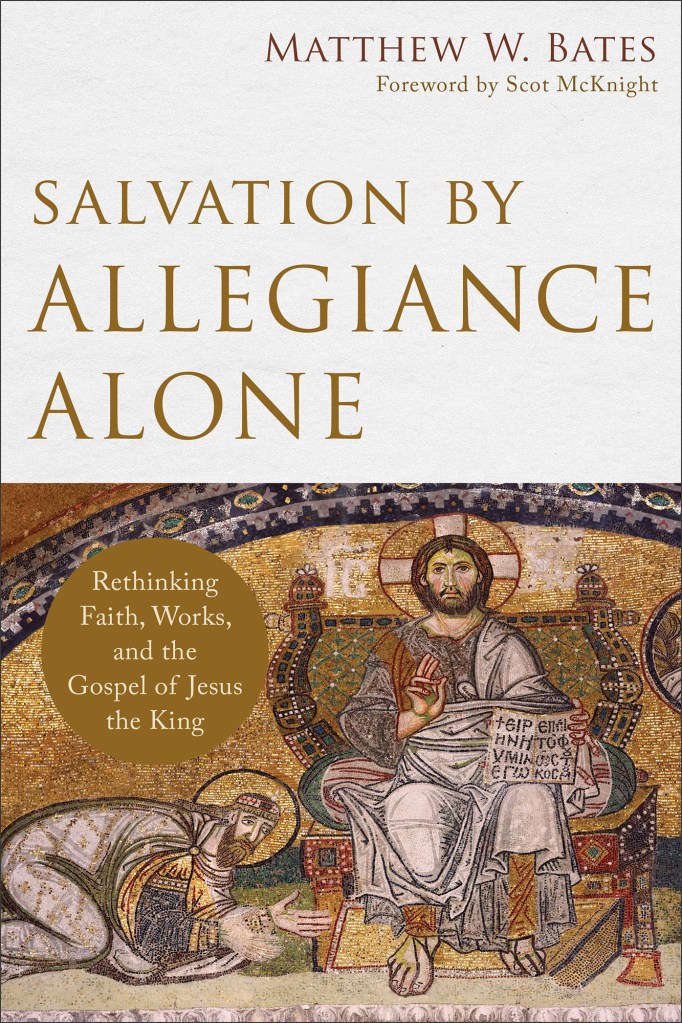
Book Review: Salvation by Allegiance Alone by Matthew W. Bates

Summary

Salvation by Allegiance Alone by Matthew W. Bates can be summed up with one of his early questions: “When the Apostle Paul says, ‘for it is by grace you have been saved through faith’ (Eph. 2:8), what if Paul’s idea of ‘faith’ (pistis) differs from typical contemporary understandings?” (p. 3). The book revolves around that single question, arguing that the Greek word pistis (typically translated as “faith”) ought instead to be rendered “allegiance” or “fidelity.” The title makes this clear. In fact, that sort of blunt clarity is one of the book’s strengths. Whether you agree with him or not, you can’t miss what he’s trying to say.

Continue reading “Book Review: Salvation by Allegiance Alone by Matthew W. Bates”

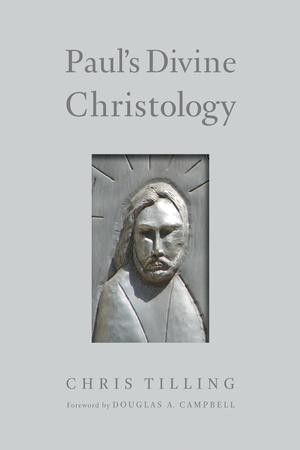
Chris Tilling. “Paul’s Divine Christology.” Grand Rapids, MI: Wm B. Eerdmans, 2012. 322 pp. $35.00 (paperback).

Reviewed by L. J. Anderson, PhD Student, Liberty Theological Seminary

In Paul’s Divine Christology, Chris Tilling offers a critical and ambitious exploration of Pauline Christology, specifically asking whether Paul’s writings support the idea of a divine-Christology. At the heart of Tilling’s argument is the claim that Paul’s unwavering “Christ-devotion” reveals a theological framework wherein Jesus is accorded a status and role reserved for God alone. This devotion, Tilling argues, functions as the clearest signal of Paul’s divine-Christology, as opposed to being merely a reflection of Christ’s work or function (177).

Continue reading “Chris Tilling. “Paul’s Divine Christology.” Grand Rapids, MI: Wm B. Eerdmans, 2012. 322 pp. $35.00 (paperback).”

Why the Nicene Creed Focuses on Jesus: A Look at the Creed’s 1700th Anniversary

The year 2025 marks the 1700th anniversary of the Nicene Creed. This foundational Christian document was first written in 325 AD at the Council of Nicaea, and it still plays a vital role in how we understand Christian doctrine today.

In this post, I want to take a few minutes to walk through the original creed, read it aloud, and explore why it places so much emphasis on the Son, Jesus Christ, and not as much on the Father or the Holy Spirit.

Continue reading “Why the Nicene Creed Focuses on Jesus: A Look at the Creed’s 1700th Anniversary”

Why AI-Generated Worship Videos Featuring Celebrities Are Ethically Wrong

By L. J. Anderson | January 2025

The rise of artificial intelligence (AI) has opened exciting possibilities in technology, creativity, and communication. But with that potential comes ethical responsibility—especially for Christians. Today, I want to speak plainly about a disturbing trend: the use of AI-generated deepfake worship videos that feature the voices, faces, and names of non-Christian artists like Eminem or Rihanna singing worship songs without their consent.

Spoiler alert: It’s not just unethical. It’s deceptive—and Christians should have no part in it.

Continue reading “Why AI-Generated Worship Videos Featuring Celebrities Are Ethically Wrong”

Christian Higher Education: Faith, Teaching, and Learning in the Evangelical Tradition. David S. Dockery and Christopher W. Morgan, eds. Wheaton, IL: Crossway, 2018. 576 pp. $50.00. paper.

Review by Logan Anderson, Ph.D. Student, Theological Studies, Liberty Theological Seminary, Lynchburg, VA.

Dockery and Morgan have edited an excellent foundational work for new or prospective higher education teachers. It is sufficiently broad as to be applicable in any discipline within higher education and specific enough that it gives very pointed help to a Christian educator in the evangelical tradition. Christian Higher Education is a “multiauthored, symphonic, and theologically shaped vision for the distinctive work of Christian higher education” (13). One important thing to note regarding this book is that the editors acknowledge differences of opinion and methodology between the authors. They specifically left many of these differences as they hoped it would give a glimpse into academic and student life from a variety of angles within the evangelical tradition (13). Each author brings a unique perspective to the discussion and the editors sought to preserve that in many instances. Despite the fact the chapters are written by different authors and address different topics, this review will primarily address the major sections of the book rather than individual chapters for the sake of brevity since this book is twenty-seven chapters long.

Continue reading “Christian Higher Education: Faith, Teaching, and Learning in the Evangelical Tradition. David S. Dockery and Christopher W. Morgan, eds. Wheaton, IL: Crossway, 2018. 576 pp. $50.00. paper.”

What Happens to People Who Never Hear the Gospel?

One of the biggest questions that we struggle with as Christians is—what happens to those who have never heard about God? This is a very important question and, in many ways, the answer is fairly depressing. Does God have mercy on those who were never reached by Christians? The short answer is no.

Continue reading “What Happens to People Who Never Hear the Gospel?”

John Wesley on Christian Perfection

One can learn a lot regarding faith and practice by studying some of the great theologians of the past. This is even, maybe especially, true regarding those that one tends to disagree with. John Wesley’s view of Christian perfection is certainly one such case of this. Most contemporary Christians who engage with it find John Wesley’s view of Christian perfection to be wrong, and perhaps rightly so, but does that mean it is not worth looking into? This paper seeks to discuss Christian perfection according to John Wesley, engage with it theologically, and demonstrate that, though there is a ton of value in it, Wesley’s view is slightly extreme.

Continue reading “John Wesley on Christian Perfection”

Interpretive Commentary on Zechariah 12-14

Historical Setting and Date

            The historical setting of Zechariah is the reign of King Darius, specifically the eighth month of the second year of his reign. It then moves through to the fourth year of King Darius’s reign which is the last date seen in the book itself. Thus, the first eight chapters of the book can be dated accurately to 520-518 B.C. based on the prophecies found within the chapters.[1] However, chapters nine through fourteen have prophecies that are not dated and there is more ambiguity as to what time frame these prophecies are referencing. Scholars have different views as to when these prophecies should be dated, but they typically date them after the first eight chapters.[2]

Continue reading “Interpretive Commentary on Zechariah 12-14”