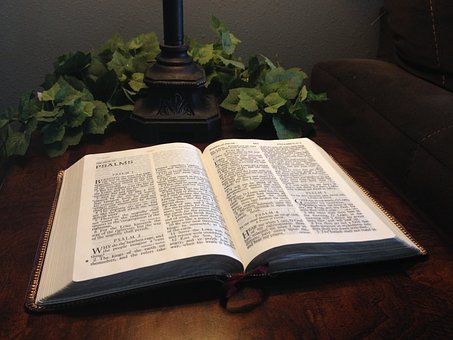
Theologian. This term is primarily used only of those who have a PhD (or three) and have published many research articles on various theological topics. Because of its reputation as being only in academia, I have heard Christians speak of the term in a derogatory manner as though theology isn’t beneficial or practical. But is that an accurate description of theologian?
First off, we need to look at what the word “theologian” means. Very simply it is “one who does theology.” Super helpful right? Ok, I guess I will define theology as well. Theology comes from the Greek “theos” meaning “god” and “logos” meaning “word” or “reason.” Combined together, it becomes “the study of God.” Thus, a theologian is “one who studies God.”
Since the word “theologian” simply means “one who studies God,” I don’t hold to the description in my first paragraph. While it is true that someone with one or more PhD’s in theology who publishes many research articles on various theological topics is a theologian, that doesn’t limit the term of “theologian” to them. Anyone who makes a practice of learning more about God is, fundamentally, a theologian.
Anyone who makes a practice of learning more about God is, fundamentally, a theologian.
L. J. Anderson
This makes me a theologian, and most likely means that you are a theologian as well since you are reading a blog on a website dedicated to learning more about God. We might not be very good theologians sometimes, but we are theologians none the less.
Where does the idea that only those in Christian academia are truly theologians come from? Well, it all started a long time ago. Only a few hundred years after Christ’s death and resurrection the Catholic church started to lean towards only letting the priests have access to Scripture. This eventually led to them decreeing that no one should translate the Bible into any language other than Latin and that none of the laity (ordinary/non-ordained people) should have access to Scripture in the early-to-mid 13th century. John Wycliffe’s bones were exhumed and burned publicly because he translated the Latin Vulgate into English in the late 14th century. Later, in the early 16th century, William Tyndale printed the first English translation of the original Hebrew and Greek texts. He was burned at the stake in 1536 for this. We no longer have the prohibition against laypeople having access to Scripture in their own language. In fact, we have a huge abundance of translations with whole organizations dedicated to translating the Bible into more languages. Yet, despite this access, we still have a disjointed view of what makes someone a theologian.
If we now have unlimited access to Scripture, why do we still believe that theology is only for the elite? I believe this is due to the view that Scripture is hopelessly complex. That only those who study it for a living are able to sift through the complexity and understand it. This is incorrect. Are there things that are difficult to understand in Scripture? Absolutely. However, I would argue that this is not the norm. Generally speaking, you don’t need to know Greek and Hebrew, or how to look them up. Nor do you typically need to know all of the historical context to understand most of the Bible. A plain reading of the text is most often going to give you the correct understanding of the text. Many of the more difficult passages can be understood by looking at other passages in Scripture that discuss the same or similar things. Don’t get me wrong, I am not saying that the original languages don’t matter or that historical context is unimportant. They are very important. I personally look at them all the time. Rather, I am saying that those things aren’t generally needed in order to understand most passages. Often the original languages and historical context shed extra light on the passage, but rarely does the meaning of a passage change enough to be worried about it.
Now that we have looked at how you likely are, or can be, a theologian, should you be one? Based on Scripture, I believe that everyone who professes to be a Christian must be a theologian. I believe this because of what Scripture says. This begs the question: What does Scripture say about all of this? Believe it or not, the Bible doesn’t say, “You must be a theologian.” It is true that the Bible never directly says this. If the Bible doesn’t directly mention that you must be a theologian, then clearly, we can’t look to the Bible to inform us on this topic, right? Well, no. Just because the Bible doesn’t directly say something doesn’t mean that it doesn’t talk about it. Such is the case here. To begin, let’s look at the greatest commandment according to Jesus. In answer to the question, “What is the greatest commandment,” Jesus says,
You shall love the Lord your God with all your heart and with all your soul and with all you mind.
Matthew 22:37
Now, you might say, “That’s talking about love, not studying God.” Which is correct. This verse is saying that we are to love God with our whole being. It says nothing about studying God. However, Jesus explains what those who love God do in other passages. For example, elsewhere Jesus says,
If you love me, you will keep my commandments.
John 14:15
And John says,
And this is love, that we walk according to his commandments.
2 John 1:6
So, to demonstrate our love for God, we must obey His commands. But how can we obey His commands if we don’t know what they are? This is where theology comes into play. A theologian asks, “What does God say about X?” A Christian theologian asks, “What does God say about X, so that I can obey to show my love for Him?” One of the most important aspects of theology for a Christian is how we apply what we have learned. There are many “theologians” who aren’t followers of Christ. They pursue knowledge of God to either disprove Him, or because they find religion fascinating. Christians are theologians primarily so that we can know God and what He desires, and then we ought to practice what He desires. After all, we know that we know God if we obey His commands. On this John says,
And by this we know that we have come to know him, if we keep his commandments. Whoever says “I know him” but does not keep his commandments is a liar, and the truth is not in him, but whoever keeps his word, in him truly the love of God is perfected. By this we may know that we are in him: whoever says he abides in him ought to walk in the same way in which he walked.
1 John 2:3-6
Aside from demonstrating our love and proving that we know God, there are other verses and passages that show us that we ought to be theologians. One of the more common ones is 2 Timothy 2:15. Paul is telling Timothy how to be a worker that is approved by God. He says,
Do your best to present yourself to God as one approved, a worker who has no need to be ashamed, rightly handling the word of truth.
2 Timothy 2:15
It is true that Timothy was a pastor, however, that doesn’t limit the truth found in this passage only to pastors. We all should strive to present ourselves as approved workers of God who rightly hand the word of truth.
The last area that I want to look at is the idea of apologetics. Apologetics is the reasoned arguments to justify something. In the case of theology, it is reasoned arguments for our faith. There are several verses that deal with this, but I am only going to address one for the sake of keeping things semi short. 1 Peter 3:15-16 says,
But in your hearts honor Christ the Lord as holy, always being prepared to make a defense to anyone who asks you for a reason for the hope that is in you; yet do it with gentleness and respect, having a good conscience, so that, when you are slandered, those who revile your good behavior in Christ may be put to shame.
1 Peter 3:15-16
As you can see, we need to be prepared to give a reason for why we believe as we do. We are not supposed to just say, “Because I do” or something similar when asked why we believe as we do. It is theology that allows us to be prepared to give a defense. If we don’t study God and His word, we won’t be able to give a defense for our faith.
So, what is the takeaway from this? Well, theology is not just for the elite or the highly educated. As Christians, we are all called to practice theology. We all need to study God by studying His word. We all ought to be able to claim the title of theologian.
As always if you have any questions feel free to email me at ljandersonbooks@outlook.com and I will do my best to answer as quickly and accurately as I can. To stay up to date on new blogs or other writings follow me on Facebook and Twitter. Also, if you have found my writing to help in your walk with Christ, please consider donating. Any and all donations are much appreciated!
Share this:


